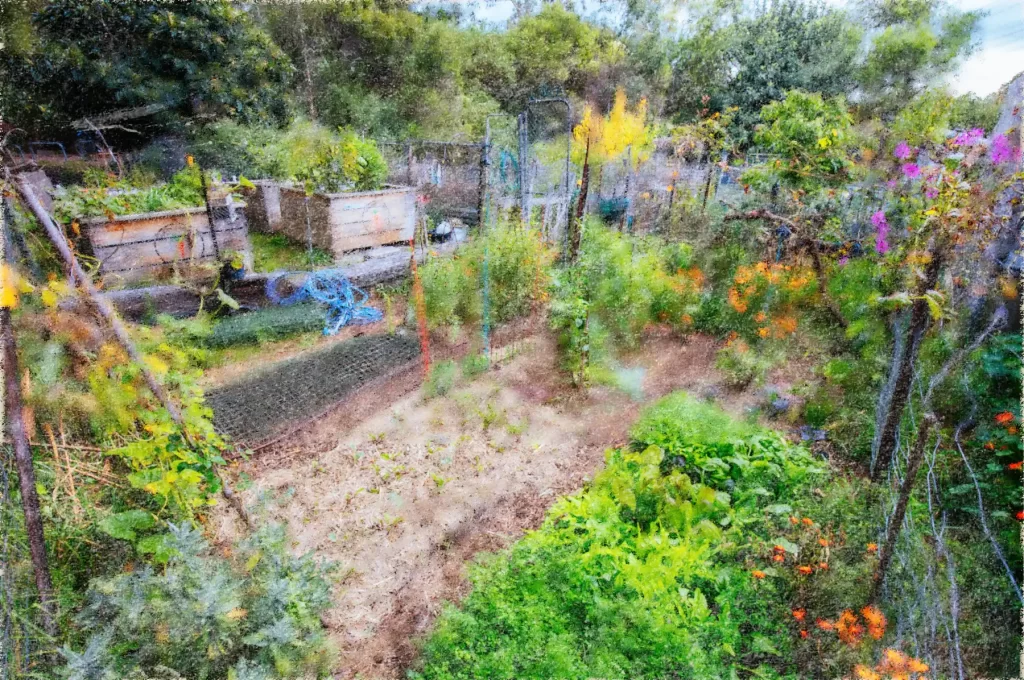
In each kitchen, there is a drawer that holds more than cutlery. Tucked between the dishcloths and the rubber bands you might find small paper envelopes, folded by hand, each labelled in pencil: rajčica, 2019. Grah. Bosiljak, od susjede. Inside are seeds saved from last summer’s best plants, waiting for spring.
This ordinary drawer holds an idea completely out of the ordinary. That the food on our table does not have to begin somewhere far away, decided by someone we will never meet. It can begin here, in this kitchen that hides a handful of seeds as habits passed from one pair of hands to the next.
If we drop one of the seeds into a pot of soil, something begins to ripple and grow outward. From the windowsill outwards to the balcony, from the balcony to a garden, from the garden to the market, the neighbourhood and the wild beyond. This is a look into these concentric rings, into a way of thinking that treats them as one living whole, and finds the inner core of permaculture wherever the seed falls.
Why food feels far away, and how permaculture brings us back to where we are
For many households, food has quietly moved further away while we were busy and not paying attention. Between 2019 and 2025, the cost of essential food in the EU rose by about a third, meaning a meal now costs roughly a third more than it did before the pandemic. Around one in ten people in the EU cannot reliably afford quality food such as meat, fish or vegetables (1).
In Croatia, food has also been travelling further to reach us. In 2024, our country imported around €6 billion worth of food, up from about €2 billion a decade earlier. Imports of bread and bakery products more than doubled in that time, from 95,000 to 202,000 tonnes, and dairy imports rose from 187,000 to 340,000 tonnes, and figures for meat import mirror the same (2). Behind these numbers are farmers whose incomes are shrinking, and land split into plots too small to farm, tangled in old inheritance rules that are hard to change.
These are large forces, and no single household can turn them alone. But they raise a question that each of us can hold onto and rethink: how close is the food that feeds us? Close in distance, close in season, close in knowledge, close in the hands that grow it. How close can it become?
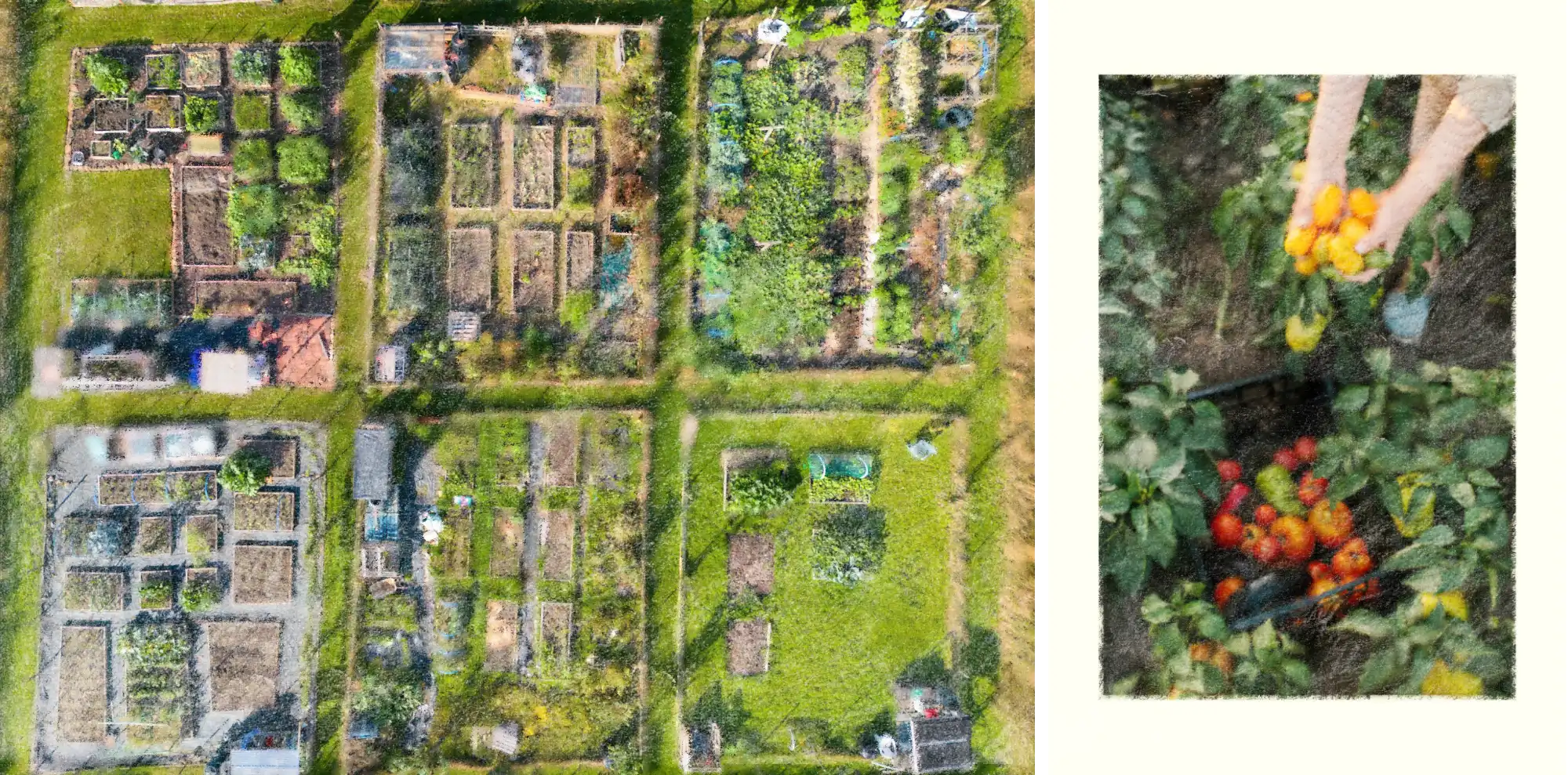
One way of thinking about that closeness is permaculture. The word joins permanent with agriculture, and it was developed in the 1970s in Australia by Bill Mollison and David Holmgren (3). At its simplest, permaculture is a way of designing the places where we live and grow food so that they work the way natural ecosystems do: diverse, interconnected and able to sustain themselves over time, rather than depending on constant outside inputs.
In practice, it reaches well beyond the vegetable bed. Permaculture looks at food, soil, water, and waste – but it extends into the systems of buildings, energy and community: how a home is placed to catch the sun, how neighbours share tools and surplus, how a local economy can keep value close.
All of this is guided by three simple ethics: care for the earth, care for people and fair share, which means setting limits to what we take and passing on what we have in surplus. Around those ethics sit a set of twelve design principles, practical rules of thumb such as observe and interact, catch and store energy, produce no waste, use small and slow solutions and value diversity. But permaculture is less a set of rules than a way of seeing. One of its most beautiful ideas is that of zones: concentric circles drawn outward from the home, from the places we tend every day to the wild we leave room for. Even in a city flat, the circles still apply: the flat is the centre, a window box the first ring, a community garden further out, and parks and wild places at the edge (4).
In this story we walk those circles one by one, from the kitchen outward, and ask what each of them can offer. Not only for those who garden, but for anyone who eats.
Zone 0: The kitchen where habits grow
The first circle is not a garden at all. It is the kitchen, and the person standing in it. In permaculture, this is the zone we visit most often, and so it is the one where the smallest changes ripple furthest, as they ripple daily.
Eating with the seasons is perhaps the simplest of them. A tomato in January has usually travelled far and tastes of little – while a tomato in August, from a field an hour away, tastes of the sun that grew it. Seasonal food tends to be fresher, often cheaper at its peak and more likely to come from nearby. In Croatia, the calendar is generous: wild asparagus and young blitva in spring, tomatoes, peppers and figs in summer, chestnuts, pumpkins and mandarins in autumn, cabbage, kiseli kupus and root vegetables through the winter. Keeping a small simple calendar of seasonal produce on your fridge gives you direct ideas on what to cook when it’s difficult to think of it every day, and makes eating an intentional ritual.
Keeping what we have is the second. Across the EU, around 129 kilograms of food per person were wasted in 2024, and more than half of it, about 69 kilograms each, in our own homes (5). Luckily, here Croatia already leans toward the light. In the first EU-wide count, Croatians wasted around 71 kilograms of food per person, among the lowest in the Union (6). Some of that is surely habit inherited from kitchens where nothing was thrown away: stale bread turned into crumbs or pohani kruh, vegetable ends simmered into broth, the last soft fruit stirred into jam.
And then, for the cold end of a year of conscious eating – there is zimnica, the autumn ritual of jars. Ajvar, pickles and baked peppers, plums cooked down into pekmez, kiseli kupus for winter. Preserving is one of the oldest forms of food security we know: it catches the abundance of one season and carries it into the next. We need to learn from these habits, as we might seem to need zimnica more and more. It is also nearly always something done together.
Finally, there is the simple act of turning the package over. Looking closer, reading where something was grown, choosing domestic when we can, and asking at the market what is in season are small gestures that cost us a few minutes, but they shape which food streams grow stronger.
A kitchen is a small country
with its own seasons,
its own borders and its own laws –
what stays, what goes,
what we decided will make us (us),
and we decided not to lose.
Zone 1: The windowsill onto the balcony
The second circle is the one just outside the kitchen: a windowsill, a balcony railing, a few pots by the door. It is tempting to think something this small cannot matter. A balcony will not feed a family. But it was never meant to. What it can do is change our relationship with food, to see that it can indeed grow close to us, from us.
Here is what might fit in this thin circle:
- A pot of herbs such as parsley, basil, chives or mint on a bright windowsill can be cut again and again through the season, replacing the small plastic-wrapped bunches that are among the most expensive things we buy by weight, and often wilt in plastic in the cracks of our fridge.
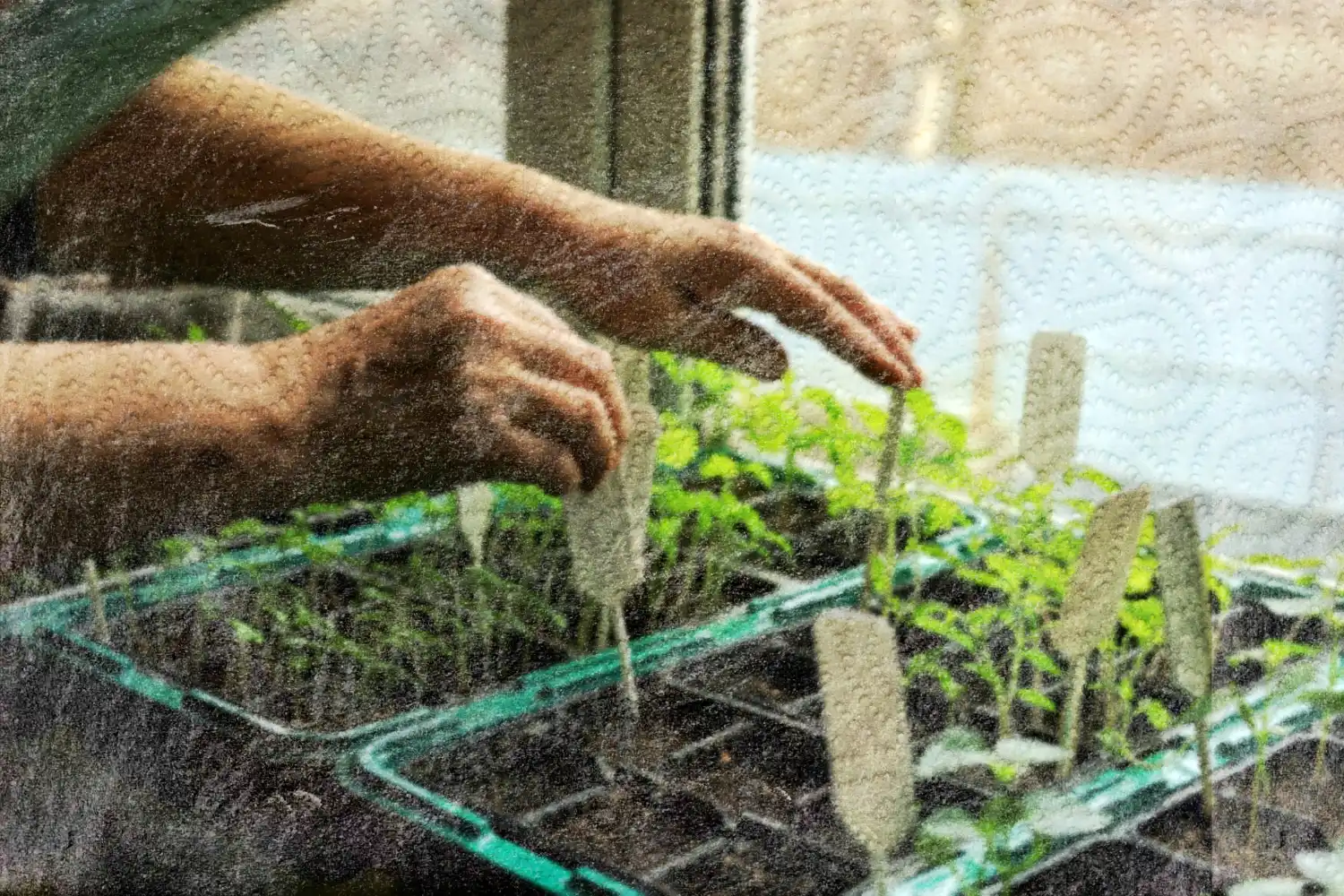
- A jar of sprouts, like lentils, chickpeas or mung beans rinsed twice a day in a glass jar will sprout in a few days, with no soil at all. It is the fastest harvest there is and a good first experiment with children – to teach future gardeners what might be possible.
- Keep the white root ends of spring onions (or lettuce heads) in a little glass of water on the sill, and they will grow green shoots again. Everyone online calls it a magical trick, but it is simply something we have forgotten.
- A single tomato plant in a large pot on a sunny balcony can give a small household fresh salads through late summer, and its best fruit can give the seeds for next year. If there are some growing next to your kitchen, you will never forget to eat salad with your meal.
- Climbing beans are happy to climb a balcony railing, turning a bare metal edge into a green wall that feeds you.
None of these will change the national import figures, but each of them teaches us the season of a plant, the patience of waiting, the taste and meaning of food picked a minute before eating. It turns food from something that arrives towards us into something that grows from us. Each saved seed holds a surprising promise: one tomato can carry enough seeds for dozens of plants, enough to share with every neighbour on the floor, and to fill all the balconies of the building.
In permaculture, this is sometimes called starting small and slow. The smallest circle is where we practise.
Do not underestimate the windowsill, where light comes in first.
Zone 2: Even the smallest garden
The third circle is the garden, which is in a city often not our own. It might be a grandparent’s plot at the edge of town, a shared courtyard behind an apartment block, a school garden, or one of the community and city gardens that are sprouting across Croatian towns.
Zagreb offers a sense of what such gardens can give. Since 2013, the city has turned unused municipal land into more than two thousand garden plots of 50 square metres each, spread across 15 locations, and offered them to residents free of charge, with inclusion in mind. According to the Faculty of Agriculture, which tends one of the plots itself, 50 square metres with a well-planned arrangement of crops can grow enough vegetables in a season for a family of four (7). Other cities are following: Rovinj, for example, opened a public consultation on its own city gardens this year (8).
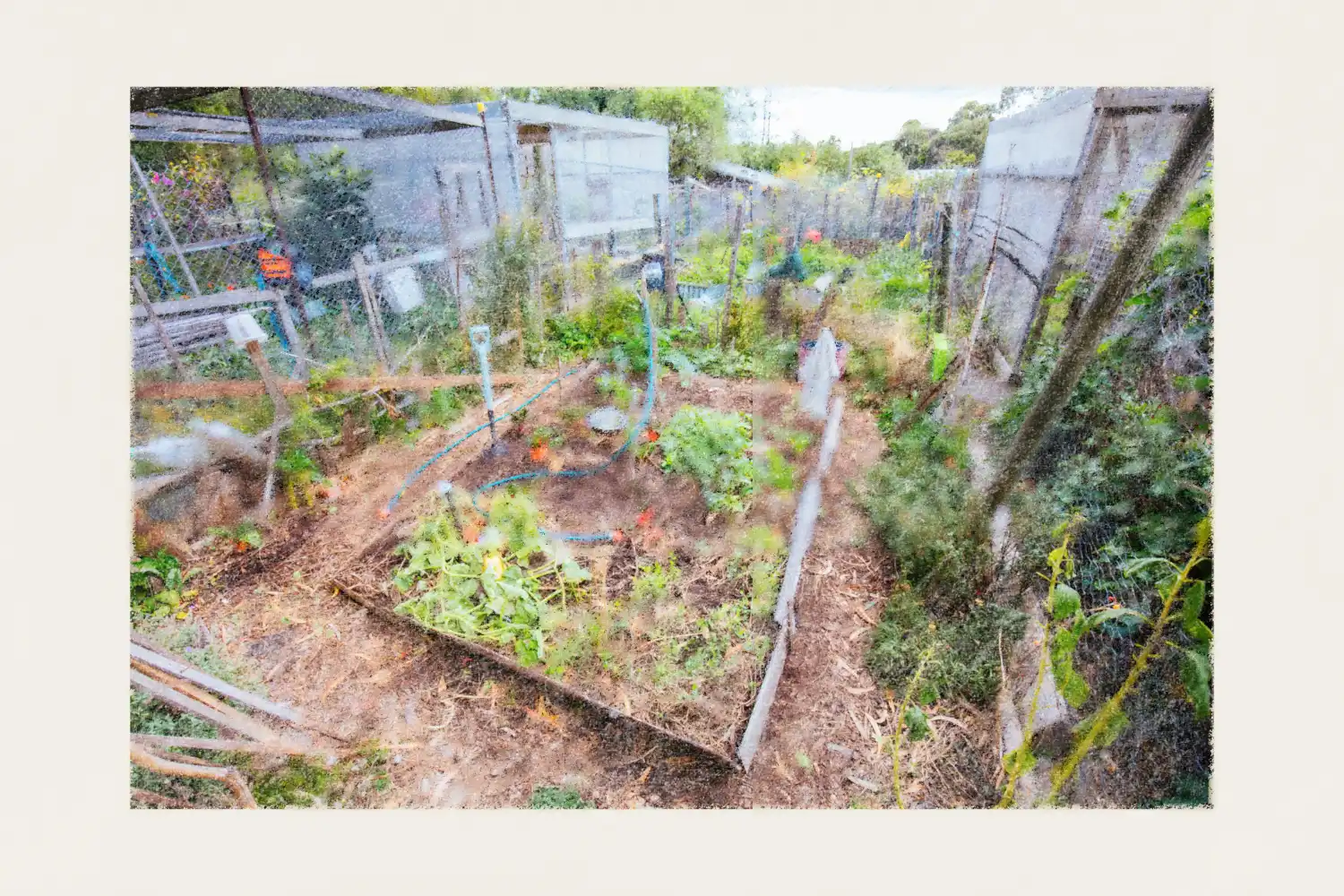
But a garden gives much more than vegetables. City gardens have been found to ease household budgets, support biodiversity, encourage time outdoors and build connection with nature, as well as with each other (9). Gardens are where neighbours who would otherwise only nod in the lift trade courgettes, advice and eventually, friendship.
Of course, it is worth being honest, too. Not everyone has the time, the health or the access to tend a garden, and growing food is not a replacement for fair prices or good social support. Gardens are only one colour in the gradient, but what they show is that land that once lay empty can become a source of food, care and community – and as there are many creative gardening methods, there are also many alternatives such services that enable citizens to pick local product themselves, without having to tend a garden all year long.
Zone 3: The farm, the market and the hands
The fourth circle reaches beyond what most of us can grow ourselves, restricted by time, space and resources. It ripples towards the people who grow food for many: the family farm, the OPG and the market stall.
This is the circle that is under most pressure. Mladen Jakopović, president of the Croatian Chamber of Agriculture, has described how shrinking farm incomes have led many to give up on production. He points to two deeper roots: land ownership that remains tangled, with plots often too small to farm and costly to merge together, and the weak position of domestic producers in a supply chain shaped by large retailers. Much of the food Croatia imports, he notes, comes from the countries where those retail chains are based (2).
These are structural problems, and they need structural answers. But this circle is also where our everyday choices meet the land most directly. Rethinking our shopping habits, looking at where a product comes from and choosing domestic when we can, helps strengthen local production, and in the end makes food more accessible and affordable for everyone (2).
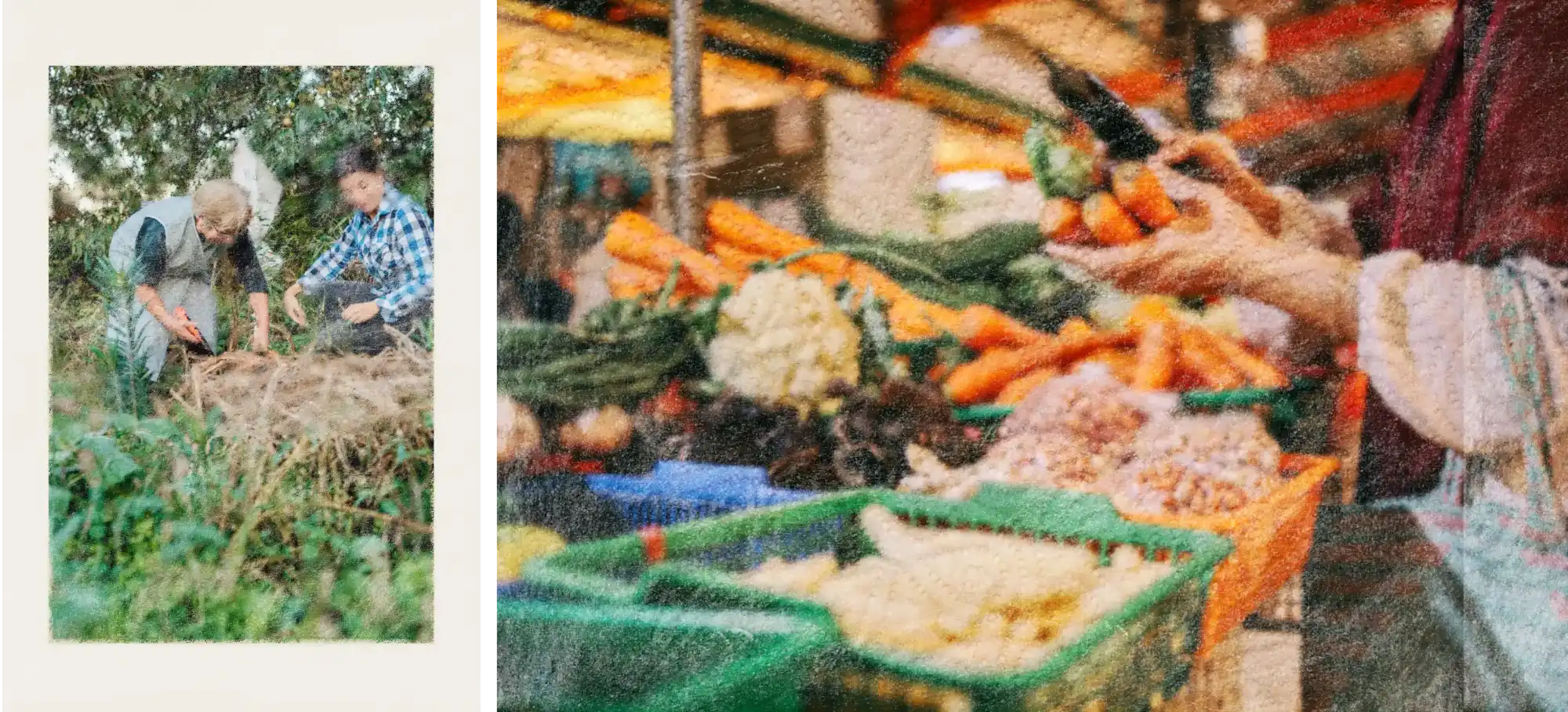
In practice, that can look like many small things. Buying vegetables at the plac from the person who grew them and asking what will be ready next week. Joining a box scheme, where a household receives a weekly share of a local farm’s harvest and the farmer gains a steady income. Choosing bread from a local bakery, cheese from a nearby dairy, honey from a close-by beekeeper.
Each purchase is a small vote and support to a food stream that we all need to stays close and growing – and to the faces behind the crates at the market, that we might with time get to know are closer to us that we think.
Zone 4: The commons which we share
The fifth circle belongs both to no one and to everyone. Commons are an important concept in every vision of sustainable future – but it is not futuristic, but it reflects back to our society’s origins and natural principles. It is made of the everything that grows stronger when they are passed around: seeds, knowledge, natural resources, surplus and time. In permaculture, this is where the principle of fair share lives most fully.
At its heart is the seed. Old, traditional varieties are usually open-pollinated, which means that seeds saved from them grow into plants just like their parents, year after year (10). Each envelope of saved seed is a small archive, one that large companies are looking to centralize and take out of the hands of the humans that have held them for centuries. They do so by making the produce that we get at supermarkets hybrid species that don’t grow true to their lineage, and therefore not all of them can’t be simply regrown from a seed.
But seeds hold the memory of a past of food independence and sovereignty, as well as the memory of our particular place: a tomato that learned to bear the Dalmatian summer, a bean that has grown in the same village in Zagorje for generations, a lettuce chosen again and again because a grandmother liked its taste and resisted to the specific pests in her backyard. When those seeds are shared, the memory travels and the variety survives.
Across Croatia, seed sharing is quietly finding new homes. Seed exchanges are held in public libraries, community centres and local festivals, where gardeners bring envelopes from their own harvest and take home someone else’s. Some libraries now lend seeds the way they lend books: you borrow a packet in spring, grow it and return a few seeds from your harvest in autumn. A seed library is one of the most hopeful ideas we know, a library that grows larger the more it is used.
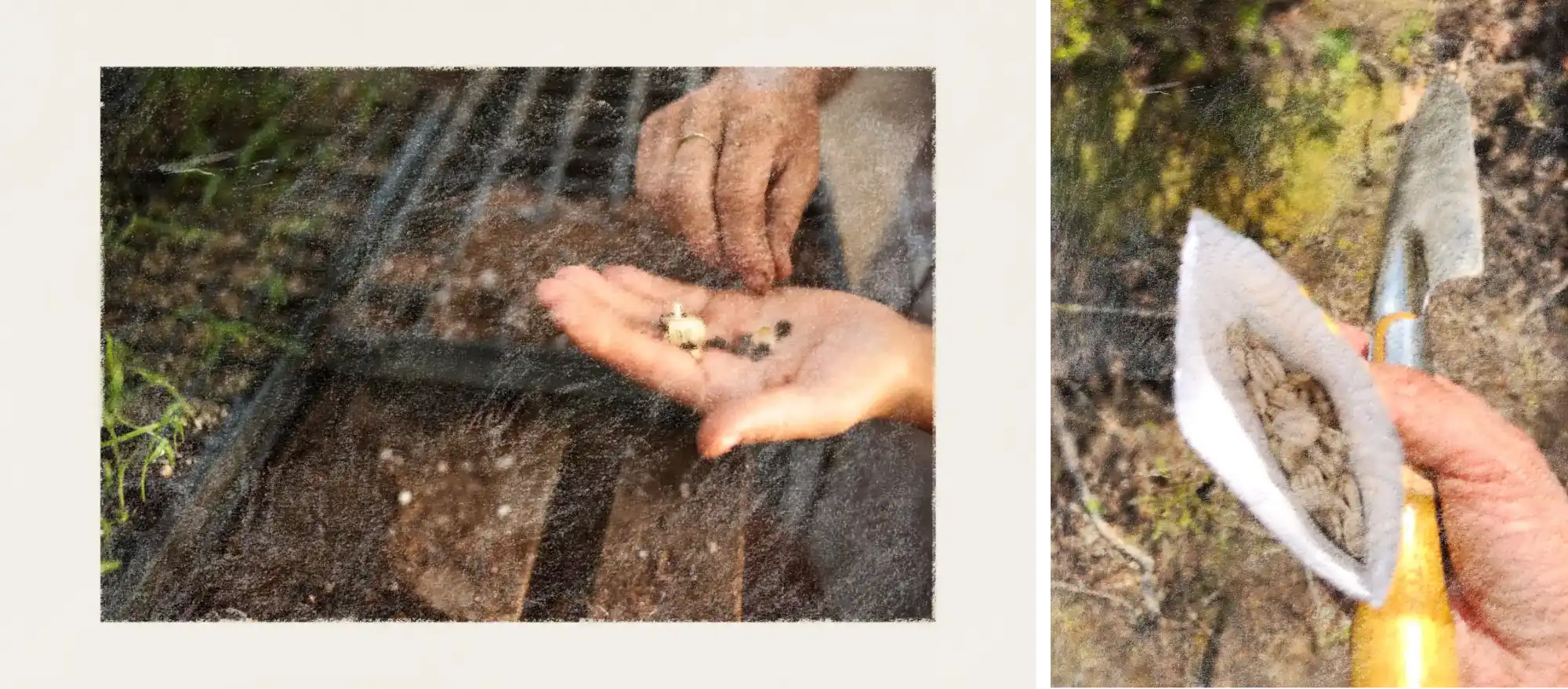
The commons is also made of knowledge. How to prune a fig, when to plant garlic, how much salt goes into a barrel of cabbage. Much of this lives in the memories of older neighbours and relatives, and it is shared not through manuals but over fences and kitchen tables. Asking for it is an act of care in both directions.
And it is made of surplus. Anyone who has grown courgettes knows the moment when there are simply too many. Passing them on, to a neighbour, a colleague or a local food bank, is fair share in its most everyday form. So is a shared fruit tree in a courtyard, a communal orchard, or a cooking evening where one family’s garden becomes everyone’s dinner.
A seed is
a letter written by
one summer, one generation, one act of care
to the next.
It only arrives
if someone
carries it.
Zone 5: The wild, close by
As in permaculture, the outermost circle is left wild on purpose – the one we don’t tend at all. It is the wild place we visit to observe and to learn nature taking its course. And it turns out that everything in the inner circles depends on it.
The tomato on the balcony, the plums at the market and the clover in the farmer’s field all need pollinators, and in Europe around four in five crop and wild-flowering plant species depend at least in part on animals to pollinate them. Those bees and butterflies live in the wild edges: hedgerows, meadows, unmown edges, overgrown corners. Leaving room for them is not a gesture against food, against using space for productivity, but it is one of the conditions for it.
The wild has been growing food far longer than we have. It also feeds us directly, if we know how to ask. In Croatia, spring famously brings wild asparagus along stone walls; late summer brings blackberries; autumn, chestnuts, sage and wild fennel of the islands. Foraging, done with respect and carefully, is one of the oldest ways of knowing a landscape: take a little, leave plenty, never pick what you cannot name with certainty and never take the whole of one patch.
And the wild is a teacher. A forest grows in layers, from tall trees to shrubs to herbs to the fungi beneath, without anyone weeding or watering it. Permaculture borrows that pattern for the food forest, a garden planted in layers that slowly comes to care for itself.
The further out we go from the kitchen, the more the lesson becomes not how to grow but how to let grow.
At the edge of every garden, there is something new waiting, keeping itself green for us.
Our next hue: one circle at a time
Every circle we tend makes the next one a little closer. We do not need to tend all six circles at once, but rather choose one and let it ripple outward.
Food doesn’t have to come from far away. It can begin on the windowsill.
Within reach
- Eat with the season for one week: build your meals around what is cheapest and most plentiful at the market right now.
- Plan before you shop, and give leftovers a second life: soups, crumbs, jams, a frittata from the last vegetables in the fridge.
- Start one thing on your windowsill: a pot of parsley or basil, a jar of sprouting lentils, spring onion roots in water.
- Turn the package over, and choose domestic when you can.
- Try one jar of zimnica this autumn, even a small one, and taste summer in January – but not an exotic summer from far away, but the one that is truly yours.
With our neighbours
- Buy directly from the people who grow your food at the plac, or join a box scheme from a local farm.
- Save seeds from your best tomato or bean, and swap them at a seed exchange or with a neighbour.
- Ask an older relative or neighbour to teach you one thing: how to pickle peppers, prune a fig or save bean seeds. Write it down, and pass it on.
- Share your surplus: extra courgettes for the neighbours, extra jars for a local food bank.
- Look into city or community garden plots near you, or a shared corner of a courtyard.
Together, with Gradient Shift.
Each of these is a seed. Not all of them will grow, and that is fine. The ones that do will make the next circle a little easier to reach.
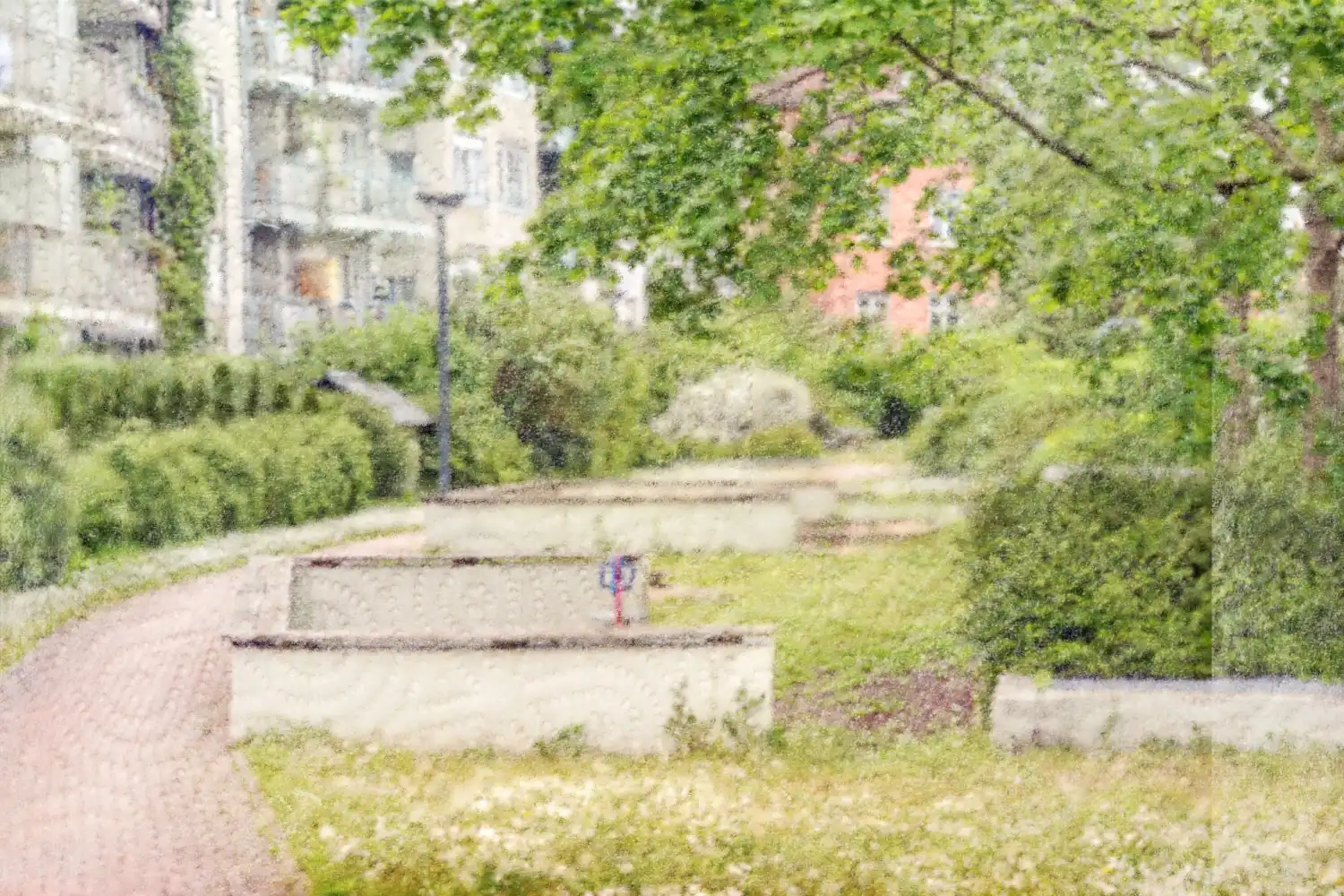
Imagine a street in a Croatian city, not far in the future. Perhaps only ten summers from now, and summers always seem to go by fast.
Alongside the plane trees and limes, some of the street trees bear fruit. A row of mulberries stains the pavement purple in June, and children stop on their way home from school to pick them. In a small square, a fig leans over a bench, and nobody minds when passers-by take one. On the flat roof of an elementary school, there are raised beds where a class is harvesting beans it planted in spring, while in the library, next to the shelf of returned books, there is a shelf of returned seeds.
The market is busy. Most of what is on the stalls was grown within a few hours’ drive, and the farmers know many of their customers by name. They both know how to find each other. In the courtyards behind the apartment blocks, shared beds have replaced a few of the parking spaces.
On almost every balcony in a grey building, something green is climbing the railing, perhaps wandering off to the balcony next to it – starting both conversation and pollination.
None of this is far-fetched. Each piece of it already exists somewhere – in a garden plot, a seed exchange, a market stall, a balcony. What this future asks is only that the pieces find each other, circle by circle.
Circle to circle open,
hand to hand open,
the city learns again
how to feed itself,
how to grow itself
grow itself back.
Circle by circle,
around tables
and overgrown fences,
where everyone belongs.
Seed by seed
holding lineages that have
yet to grow.
Sources
- Seed World (2025): Against hunger and food poverty
- Croatia Week (2025): Why Croatia is importing more food than ever before
- Communities (2019): Permaculture 101 and attending to zone zero
- Barnes Common: What is permaculture, and how can I apply it in my own garden?
- Eurostat (2025): Food waste and food waste prevention, estimates for 2024
- N1: Croatian MEP – 10 percent of food in EU wasted
- AEM / City of Zagreb (2025): Urban agriculture in Zagreb
- City of Rovinj (2026): Public consultation on city gardens
- Zagreb – Healthy City: The City Gardens project
- Net.hr (2026): Zagreb city gardens call
- Glas Istre (2026): All about saving seeds
- European Commission: Pollinators